
You may have heard about changes that are happening to our assessment pathways for Autism and ADHD in Greater Manchester. We recently shared a document from NHS Greater Manchester, but many people asked for more clarity around whether everyone will receive an assessment, and how the process will work. This feedback was taken on board, and we now have more information to share.
We know this news is worrying for lots of families. We’ve shared our concerns with the teams who are working on these changes and asked them to continue to engage with us throughout the transformation.
So far in Manchester, we’ve held two engagement sessions for parents and carers to speak with the CAMHS team, and we were at the SCP coffee morning earlier today with the Autism Navigator team. These sessions were opportunities for families to let the teams know what they would like to see in the new Needs-Led Offer. If you’ve been unable to attend so far but would like to give feedback, please look out for future sessions or send your comments to mcr.autismnavigator@mft.nhs.uk
Please use the toggles below to read more information about these changes or click the Download button to save a document containing all of the listed questions and answers onto your device.
NHS GM designed the new process through a series of in-person and on-line workshops, meetings, and surveys. These involved clinicians, service providers, commissioners, parents, carers, people with lived experience and young people.
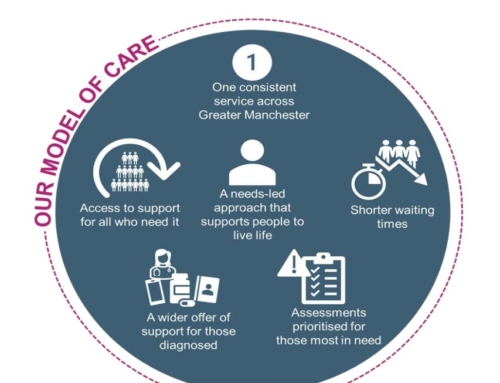
The new process makes sure requests for assessments are reviewed in the same way across GM and will benefit children and young people and their families, by prioritising those with the highest levels of need for earlier assessment. It will also mean all children and young people with autism and ADHD related symptoms can access the support they need when they need it, with or without a diagnosis.
Plans for introducing the new process for reviewing requests for assessment are being put in place from January 2026. They will be introduced step by step across services that support children and young people with autism- and ADHD-related needs.
Introducing changes gradually is important to make sure children and young people are supported safely during the transition.
The new process will bring together experienced professionals from different services.
First this will include Child and Adolescent Mental Health Services (CAMHS) and paediatric clinicians.
The longer-term plan is for Social Care and Education to be included, so that care is more joined up for families. They will work together to decide the right type and level of support for each child or young person based on their needs. Their decisions will be guided by newly developed clinically agreed criteria, so that decisions are fair and equal across GM.
Not every child or young person will meet the clinical criteria for an assessment after the initial review.
Not every child or young person will have the level of need or complexity for an NHS-funded assessment. However, every child and family will still receive a personalised offer of support through the new needs-led services. Needs-led means that support is based on what a child or young person needs rather than whether they have a diagnosis.
Children and young people with the highest needs will be prioritised for earlier assessment. Children and young people who are eligible for an NHS assessment based on the new criteria but have less urgent needs than others will wait longer for an assessment.
All children and young people will receive an offer of support from within their own borough where they live. This support will be based on an individual’s need with or without a diagnosis.
The new early support offer will be available in phases from January 2026. It is designed to help children with autism- and ADHD-related needs and their families by providing them with access to specialists and proven, research-based support.
- Neurodevelopmental Roles –
Professionals trained in how autism and ADHD affect thinking, attention, behaviour, and social skills. They assess your child’s strengths and challenges and give advice tailored to your child’s or young person’s needs. - Professionals trained to deliver evidence-based interventions, which means the methods and strategies they use are proven by research to help children and young people.
- Neuroprofiling Tool –
Helps identify a child’s or young person’s learning style, strengths and needs, and provides strategies which support them at home and school. - Workshops –
Parent workshops on topics such as behaviour, communication, and coping strategies available online and in-person. - A new website –
A new GM neurodevelopmental website is launching soon, which will include easy-to-read information and dedicated sections for parents and carers, young people and professionals, self-help resources and toolkits, recorded webinars on important topics, online mental health support, and a new chat messaging service.
Senior CAMHS and paediatric clinicians will look at information from parents, schools, and other professionals to decide what support is needed and how quickly. They will use clinically agreed criteria to guide their decisions. This means children and young people are directed to the right service at the right time, based on their levels of need.
Assessments will continue to take place locally in either CAMHS or community paediatric services, depending on the borough. CAMHS will focus on assessments for children and young people who have moderate to severe mental health needs or those with moderate to severe functional impairment due to distress.
We know many families have been waiting a long time for assessment and support. Experienced CAMHS and paediatric clinicians will review all children and young people currently waiting for an assessment using the new process and criteria. Where children and young people have been waiting a long time, services will contact the family to ensure they are reviewing the most up-to-date information.
Not every child or young person on the waiting list will meet the clinical criteria for an assessment. Not every child or young person will have the level of need or complexity for an NHS-funded assessment. This will mean that some children and young people will not remain on the neurodevelopmental waiting list, but all children and young people will receive a needs-led offer of support. This will mean children and young people receive the right level of support to meet their individual needs.
If your child’s or young person’s needs change over time, they can be re-referred to local services either by their GP, school or other professional, dependent on the borough, to request an assessment.


Leave A Comment